Seams Opened by Winter
- You See
- Drips that start a few days after snow, then stop.
- What It Means
- Meltwater sat against a lap that froze open. The seam needs a patch before the next thaw widens it.

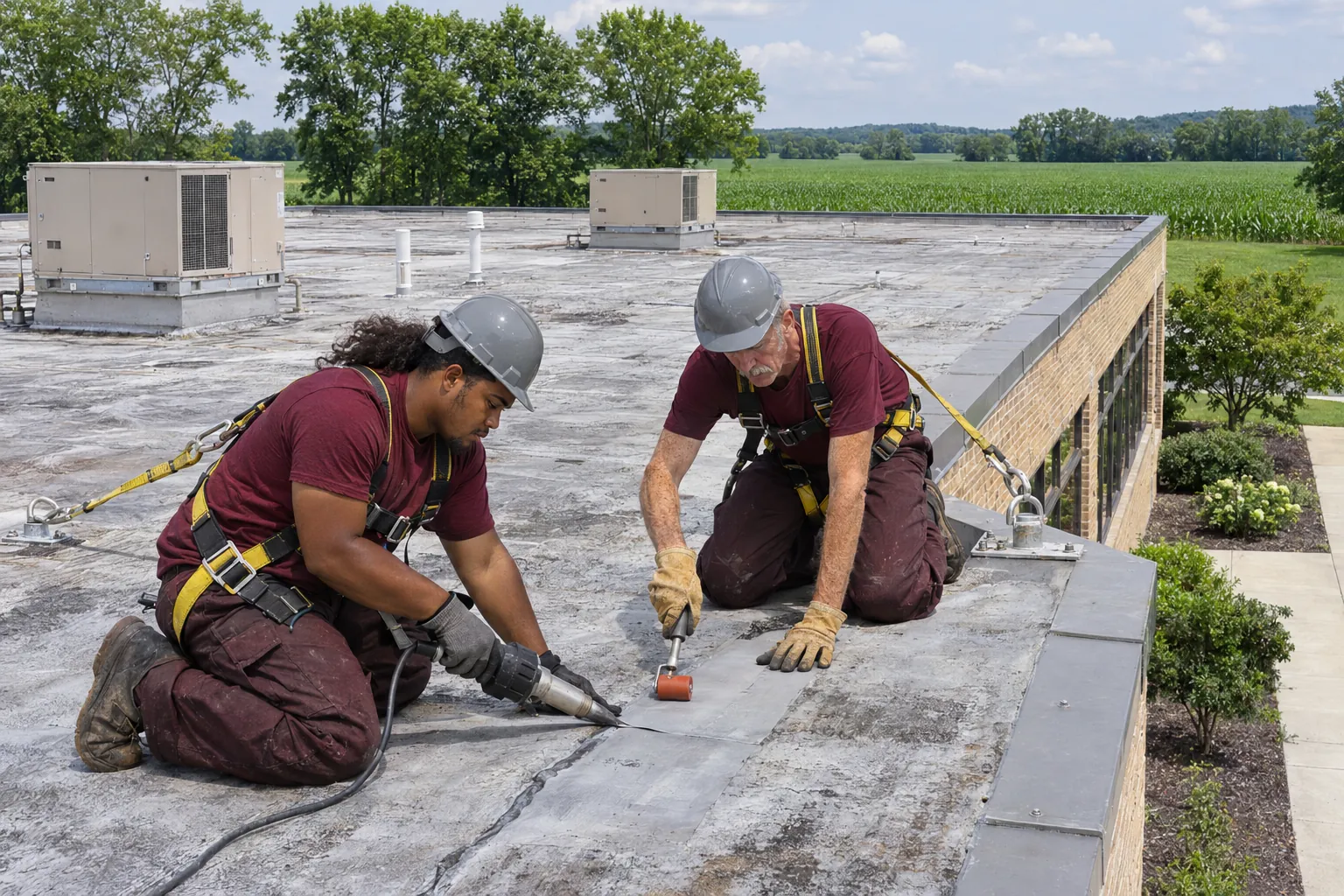
As a Columbus commercial roof repair contractor, we trace each leak to its opening and repair it in material that matches your membrane or metal roof.
Columbus commercial roof repair calls usually begin with one of these six conditions. Each card names the cause behind it and what it means for the roof.
Four repair services, each named for the roof or the place water shows up first. Pick the folder that matches your building.
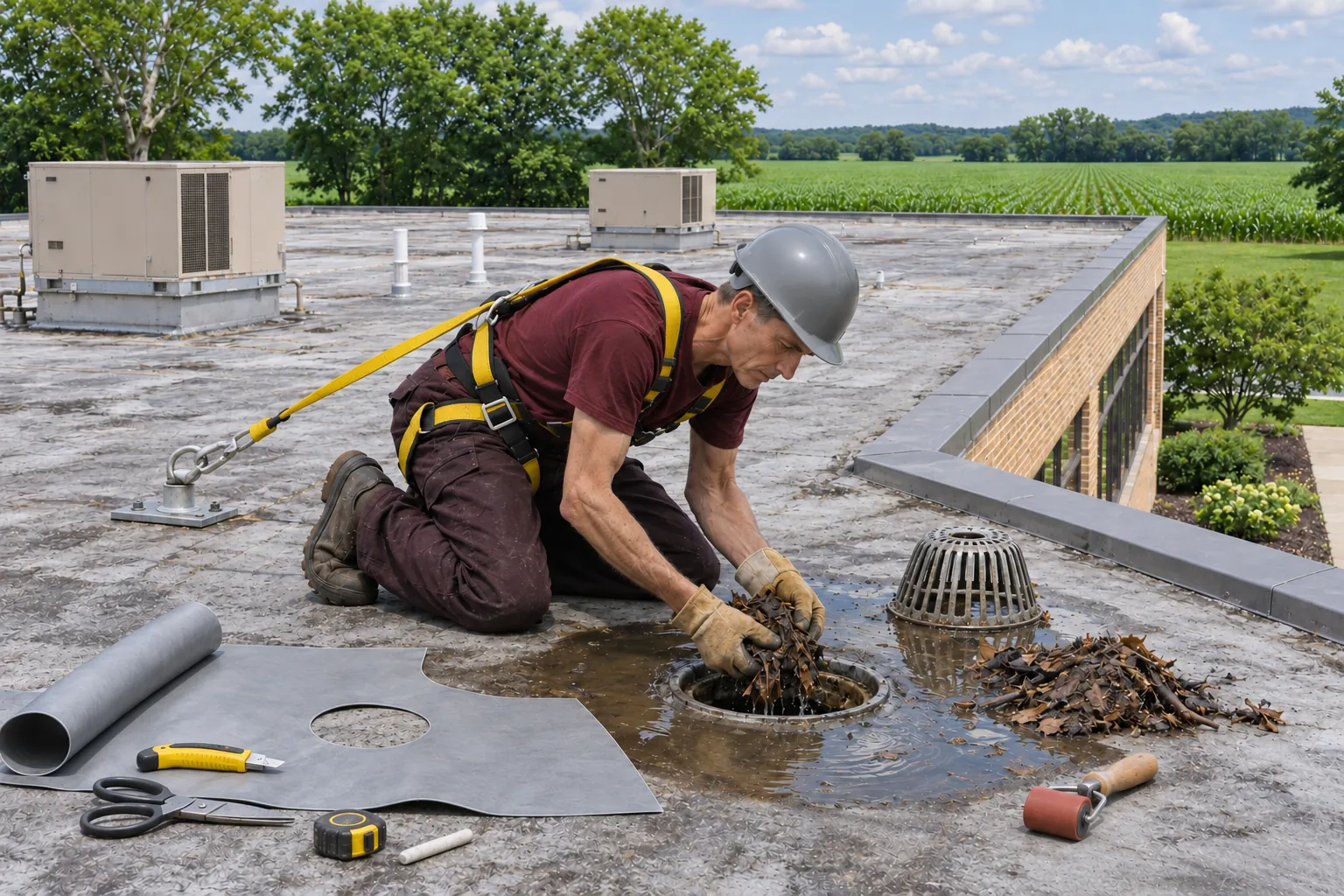
TPO, EPDM, and modified bitumen roofs over offices, clinics, and light industrial shops, where drains clog and laps open along the field.
Typical Repairs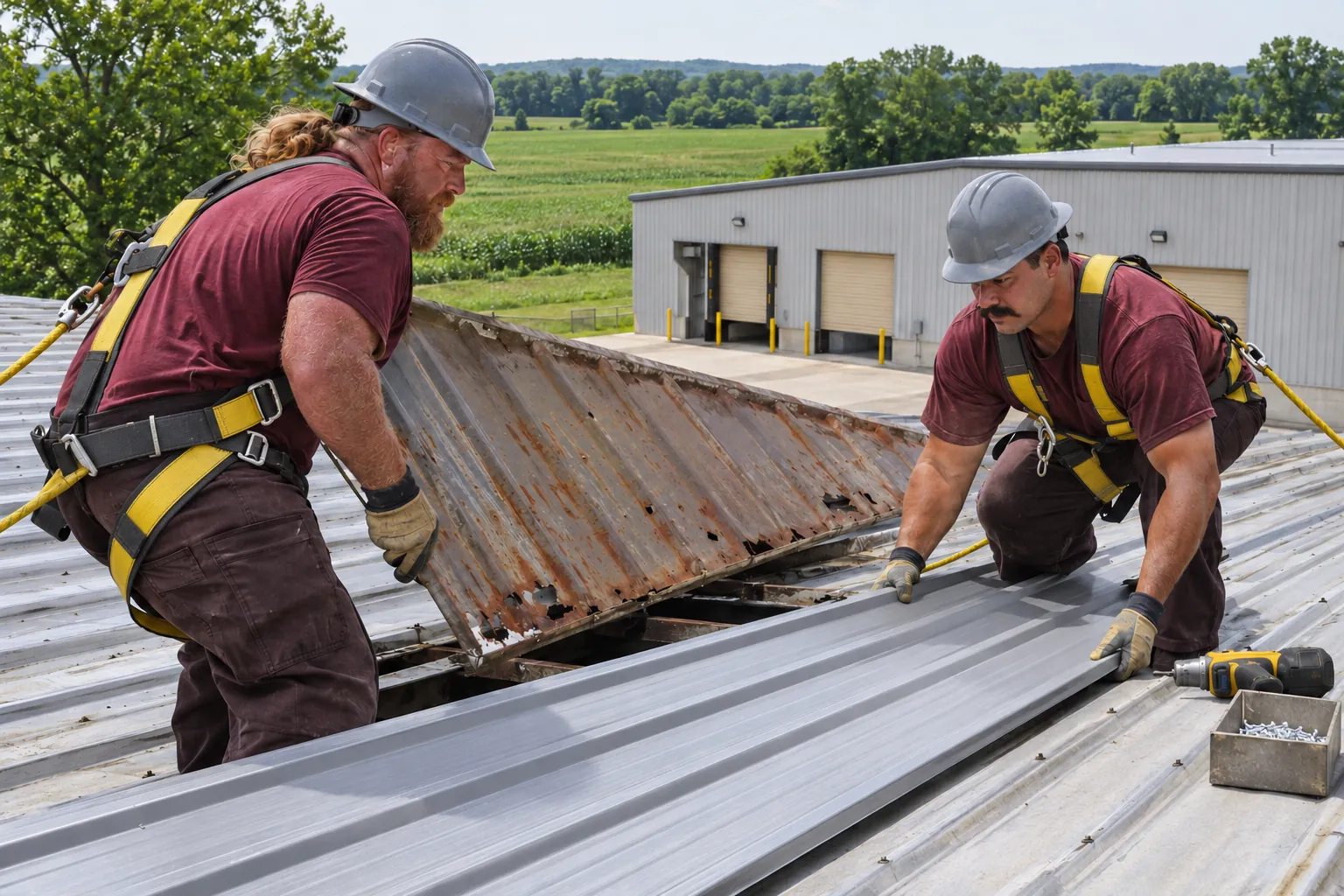
Ribbed and standing-seam steel over warehouses, farm buildings, and shops, where washers crack, trim loosens, and eave panels rust through.
Typical Repairs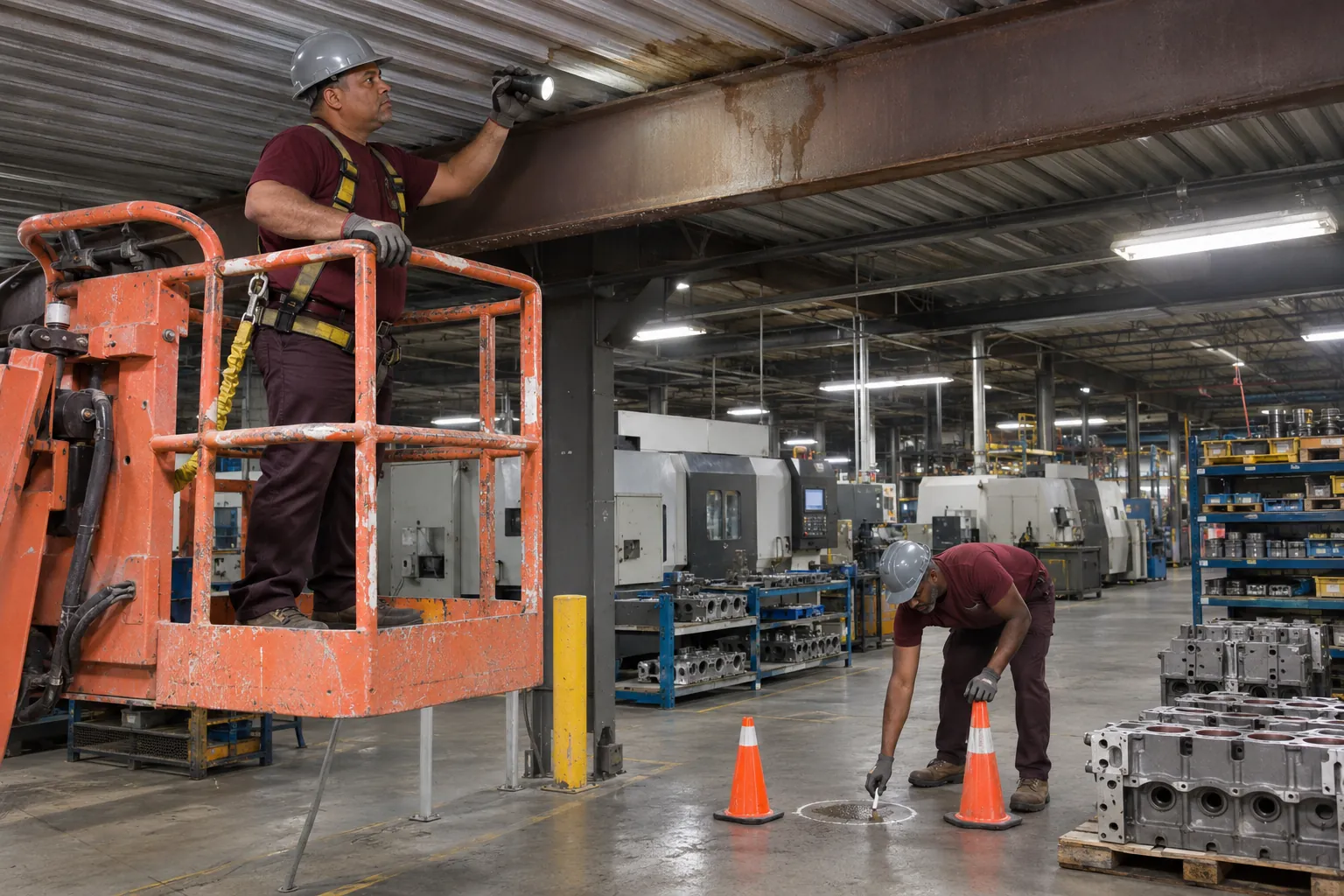
Leaks you meet indoors first, traced from the wet ceiling tile or floor up through the deck to the parapet, curb, or seam letting water in.
Typical Repairs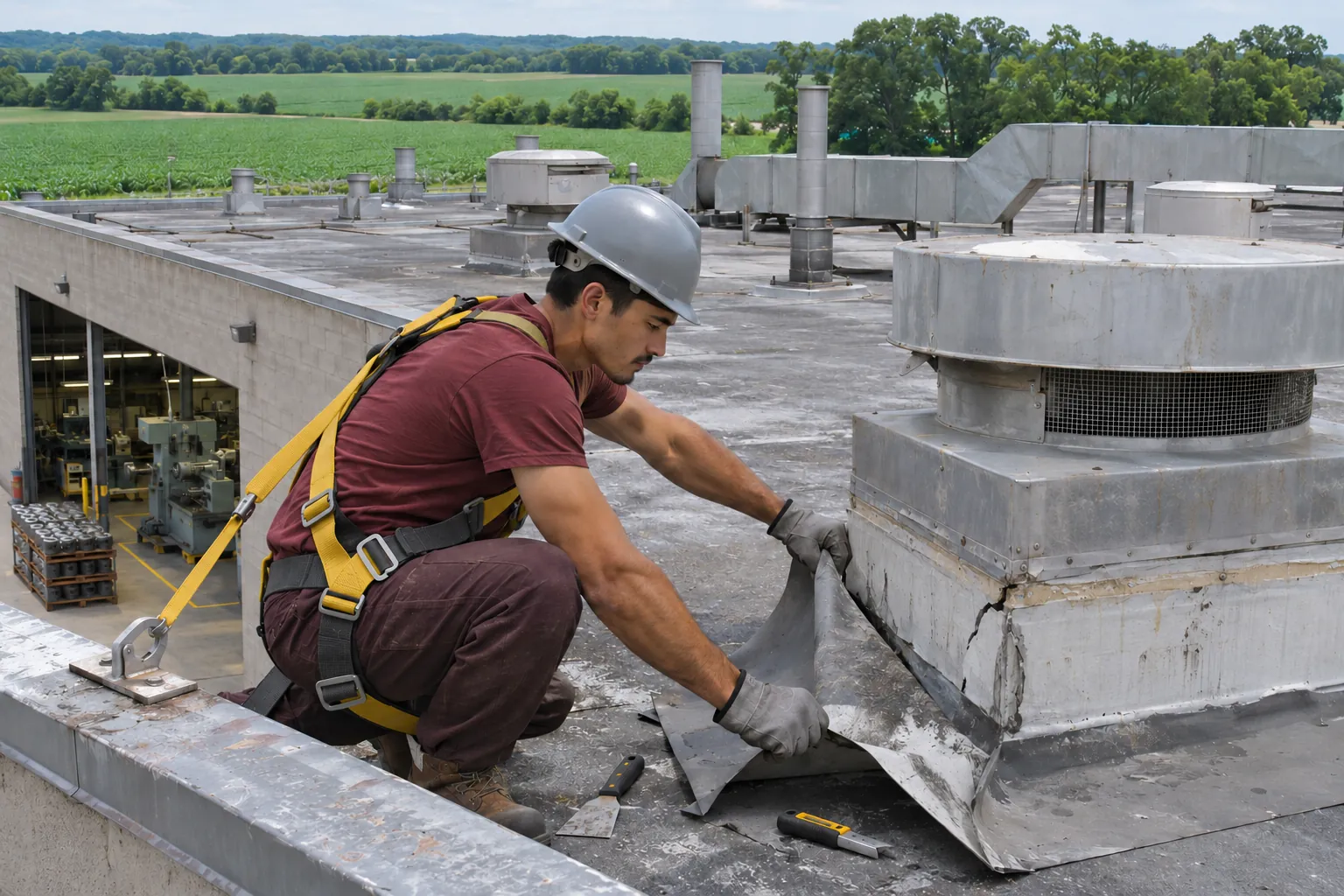
Large roofs over machining floors and assembly lines, where exhaust fans, stacks, and technician traffic wear out membrane and curbs.
Typical RepairsMost roof failures follow a handful of patterns. Each pair below names one and what a repair at that detail does about it.
Membrane laps over a production bay open slowly as the roof expands and shrinks each season.
A welded or primed cover strip closes the lap from the roof surface, so the line below keeps running while the patch goes on.
One puncture can wet a wide ring of insulation, which then crushes underfoot and stops holding heat.
Cores mark the wet edge. Only that area is cut out and rebuilt, which keeps dry insulation in service and the deck protected.
Meltwater refreezes at gutters and low eaves, then pushes under laps and trim on metal buildings.
Eave laps get new sealant and closures, and edge flashing is reset, so meltwater loses its path under the panels.
Steel panels move daily with temperature, and that movement backs screws out until the washers leak.
Larger screws with new washers bite fresh steel, which ends the drip line that follows each loose row.
Call and tell us where the drip lands. Move stock and equipment clear, and we will set a time to find the opening on the roof above it.
Repair fits most roofs that leak in a few places. The second list shows when we will tell you a larger plan makes more sense.
Every visit follows the same five rows, from the stain inside to the photo of the finished patch.
Inside, we mark every stain and drip and look at the deck above them. That map tells the roof crew where to start walking.
Up top, we follow the slope from each mark to the seam, curb, drain, or parapet that let water in, then probe for soft spots nearby.
Core cuts and meter readings show how far water spread into the insulation, which sets the size of any cut-out.
You get a list of each roof detail to fix, the matching material, and photos of what was found, with urgent items marked first.
Patches, flashing, and fasteners go on in matching material. Work over occupied rooms closes up each day, and dated photos show the finished detail.
We take commercial roof repair work in Columbus and five towns nearby. Outside them? call us or send us a message.
Warehouse roofs with skylights, hatches, and long membrane runs.
Seymour commercial roof repairShort answers to what Columbus owners and facility managers ask before the first visit.
Every seam, drain, gutter, curb, and edge gets walked and photographed, along with the stains inside. Soft spots get probed and ponding gets noted. Your copy lists urgent repairs first and items to watch second, so the budget goes to the openings letting water in today.
Documentation comes first: dated photos of each bruise, split lap, and cracked washer, so an insurance claim has a record. After that, damaged membrane is cut out and patched, wet insulation is replaced, and metal laps, trim, and skylights are resealed or replaced to match the roof.
Clear people and equipment from under the drip, catch the water, and shut off power to anything electrical that is wet. Take photos and note the time. Then call us; a temporary seal stops the water until the source is traced and the roof is dry enough for the permanent repair.
Price follows the roof system, the size of the damaged area, how much insulation is wet, whether drains or flashing are involved, roof height, and how long tracing takes. A cracked pipe boot is a short visit; a soaked section is a larger job. Each repair is priced after a free on-site estimate.
Usually, yes. Repairs run from the roof surface, and when the deck has to be opened, the area below is covered or cleared first. Hot work, lifts, and roof access get scheduled with your safety staff, and patches near exhaust use membrane rated for heat and residue.
Ask before work starts, because a small patch and a large re-roof section are often handled differently. Building permits and inspections for Columbus run through the Bartholomew County Department of Technical Code Enforcement, and commercial construction in Indiana follows the Indiana Building Code in 675 IAC 13.
Tell us where water shows up and what the roof is made of. We will inspect it, trace the opening, and send a written repair scope.